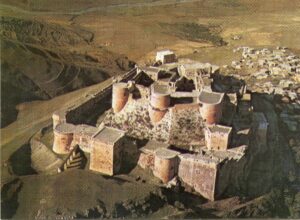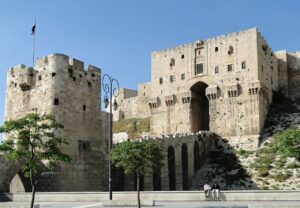
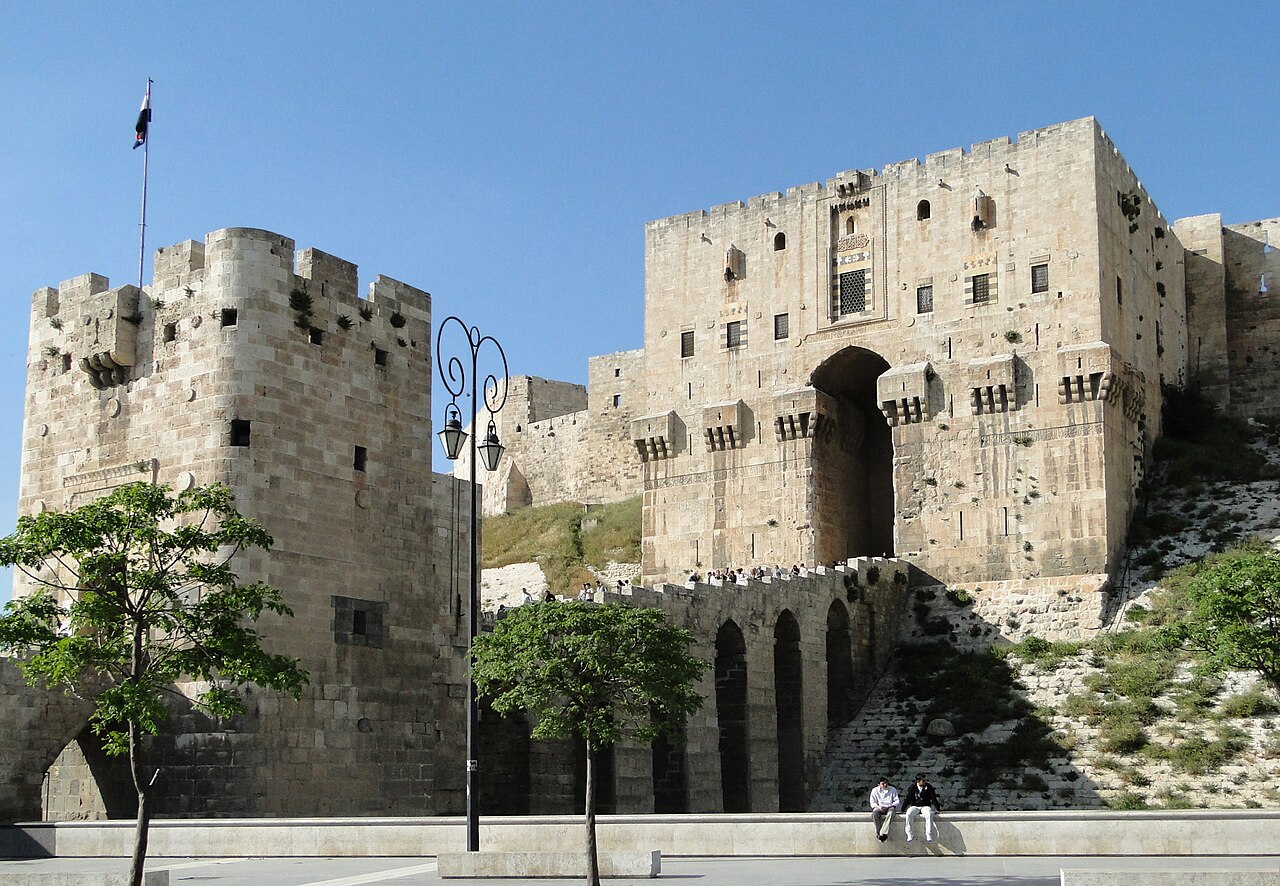
Aleppo Citadel stands in the middle of the old city on a hill that rises about 50 metres above its surroundings, and it is counted among the oldest and largest castles in the world. This guide answers the questions people ask most: how old the citadel is, who built it, what is inside, and how to plan a visit today.
Aleppo Citadel at a glance
- Location: the centre of the Ancient City of Aleppo, a UNESCO World Heritage Site since 1986.
- Size: an oval base 450 metres long and 325 metres wide, narrowing to about 285 × 160 metres at the top.
- Moat: it circles the hill, about 22 metres deep and 30 metres wide.
- Main character: Ayyubid, from the 12th and 13th centuries, with Mamluk and Ottoman additions.
How old is Aleppo Citadel?
It depends on what you count. The hill itself has been in use since at least the middle of the 3rd millennium BC, more than 4,500 years ago. The evidence is the temple of the storm god Hadad, uncovered inside the citadel by a Syrian-German archaeological team. The walls, towers and gateway that visitors see today are mostly Ayyubid, which makes them about 800 years old.
Who built Aleppo Citadel?
No single ruler built it. The citadel is the work of one civilisation after another:
- Hellenistic period: Arab historians credit Seleucus I Nicator with turning the hill into a fortified acropolis.
- Hamdanids: Sayf al-Dawla made Aleppo his capital in the 10th century and strengthened the citadel.
- Nur al-Din Zengi: rebuilt and fortified it after the earthquake of 1157.
- Al-Zahir Ghazi: the son of Saladin, and the ruler who gave the citadel the shape it has now. He deepened the moat and built the bridge, the fortified entrance, the palace, the baths and the Great Mosque.
- Mamluks: restored the citadel after the Mongol attack of 1260 and Timur’s in 1400, and added the Throne Hall above the entrance.
- Ottomans: the citadel lost much of its military role, and a barracks was added at the top in the 19th century.
What is inside Aleppo Citadel?
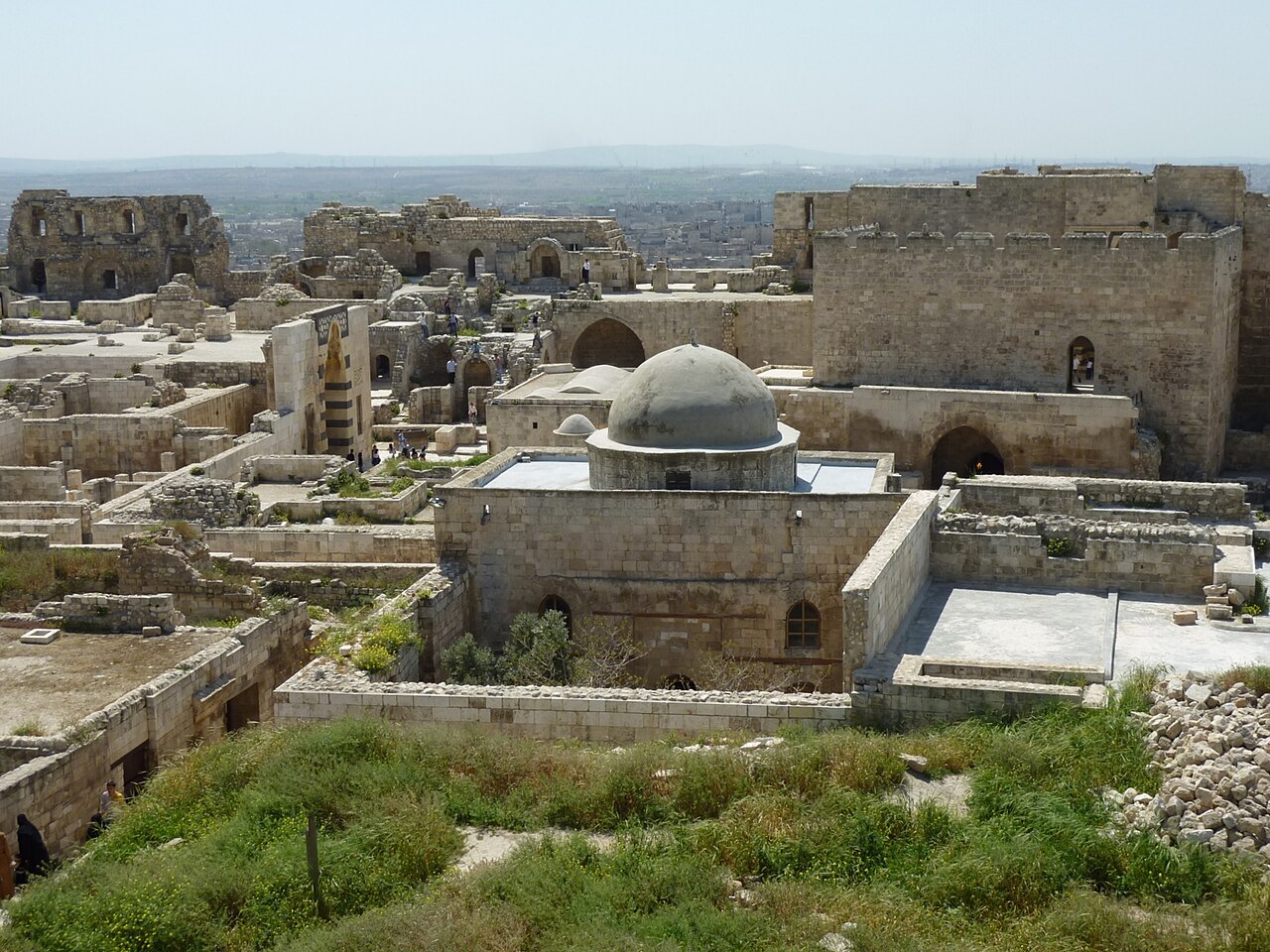
The citadel is a small city within the city. The main things to see:
- The bridge and entrance: an arched stone bridge crosses the moat to the gate tower, followed by a bent passage with several gates, designed to slow attackers down. The best known are the Gate of the Serpents and the Lion Gate.
- The Throne Hall: a Mamluk hall above the entrance, begun in 1406 and completed in 1417, known for its decorated wooden ceiling.
- The Ayyubid palace and baths: the remains of the royal palace built by al-Zahir Ghazi and renewed in 1230.
- The Mosque of Abraham: attributed to Nur al-Din Zengi in the 12th century. Local tradition links the hill to the Prophet Abraham, who is said to have milked his flock here.
- The Great Mosque: at the highest point of the citadel, built in 1213–1214, with a square minaret 21 metres tall that looks over the whole city.
- The Temple of Hadad: the oldest part of the citadel, with basalt reliefs.
- The amphitheatre: a modern theatre that hosts concerts and cultural events.
- Wells and underground passages: a network of wells, cisterns and passages. Some wells reach about 125 metres deep.
Is Aleppo Citadel open to visitors?
Yes. The citadel was damaged during the war years and again in the earthquake of February 2023, and it closed in late 2024. On 27 September 2025, to coincide with World Tourism Day, it reopened to visitors after the first phase of restoration. That work covered the water and electricity networks, the entrance, and the damaged walls and columns. Restoration is being done in phases, so you may find some sections closed for a time.
Tips for visiting Aleppo Citadel
- Time: allow an hour and a half to two hours.
- Shoes: wear comfortable ones. The visit involves a climb, steps and uneven stone floors.
- Best time: early morning or shortly before sunset, when it is cooler and the view over Aleppo is at its best.
- Hours and tickets: these change from time to time, so check at the ticket window at the entrance, or with the Directorate of Antiquities and Museums in Aleppo, before you go.
- Afterwards: carry on into the old souqs around the citadel and the cafés facing its entrance.
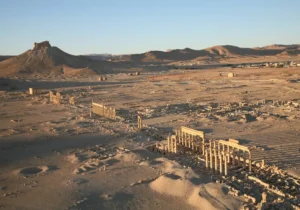
Have you visited Aleppo Citadel? Tell us about it in the comments, and read next: Palmyra, the Bride of the Desert.
Cover photo: Bernard Gagnon, Wikimedia Commons (CC BY-SA 3.0).